After the first breakthroughs in the United States, AI technology quickly became available across the world. There was a lot of money at stake, and moving slowly was considered a risk. Demand for processors and memory surged, driving prices higher. The United States responded by restricting exports of advanced chips to China. These restrictions affected not only American companies but also foreign firms that relied on US technology. As a result, China was forced to find alternative ways to remain competitive.
Without the same access to cutting-edge hardware, Chinese companies focused heavily on software optimization. Instead of relying only on more powerful chips, they worked on making AI systems more efficient. A growing number of models appeared, each introducing improvements and pushing the technology forward in different ways.
Europe, meanwhile, is taking a different approach. Rather than sprinting to the finish line, it is focused on long-term stability, regulation, and safety. Whether this proves to be wisdom or hesitation remains to be seen. Europe’s structure makes rapid, coordinated action difficult, as decisions often require agreement across many countries and institutions.
The most remarkable aspect of the AI race is that nobody fully understands it. We know that larger models, more data, and greater computing power tend to improve results. Improvements are arriving at an ever faster pace. What once took months or years can now be replicated, analyzed, and improved upon in a matter of weeks. The feedback loop between new models has become remarkably short, and no clear endpoint is in sight. Yet the exact reasons why new capabilities emerge remain unclear.
Despite this uncertainty, every major power continues to invest. The fear of falling behind is greater than the fear of not fully understanding the technology. That is what makes the AI race so remarkable. Never before have so many resources been committed to something that even its creators cannot completely explain. Yet the race continues, and it is accelerating.
The race has only just begun. The United States took an early lead, and China quickly narrowed part of the gap. Europe is moving more cautiously, balancing innovation with regulation. Yet despite all the progress made so far, we may still be closer to the beginning than to the end.

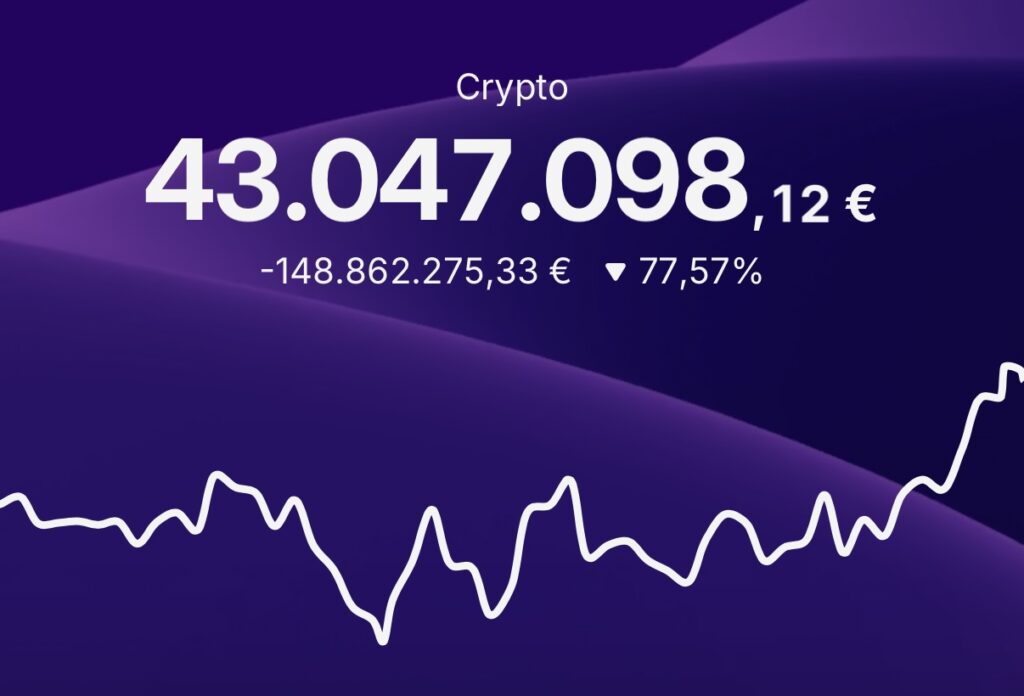 Seeing an unexpected figure like that pop up on a screen can certainly feel surreal and disorienting. My first though was ‘What?’. After some looking around it was quickly clear that there was some kind of error. The graphics showed me that the crypto I bought years ago for 50 euro was actually worth a lot less.
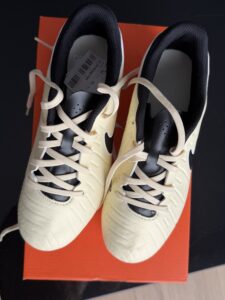 Sometimes you just have to seize an opportunity. In this case, we came across a pair of football boots for Alan. They were a little too big, but he was so excited about them that we decided to buy them anyway. The idea was that he’d grow into them in a few years.
 The kids were happily playing, the mothers were chatting away, and I went for a nice run. I do that more often, but this time was a little different than usual. From a big skate park, I run a loop of about five kilometers through the neighborhood. It’s all mountain paths, with the occasional bit of asphalt. After about a kilometer, I came across a group of sheep. Just on the public road. There were about fifteen of them, I think, and five were little ones. Cute. I stopped for a moment and grabbed my phone to take a picture. One sheep walked up to me, and I thought, ‘Oh, how nice, I’ll pet him’.
 My mother-in-law’s (MIL) apartment is being painted. Time to remove unwanted shelves and screws from the wall so the whole wall looks nice and smooth. Some new holes were also drilled in the wall to move things to a better spot. Ana/MIL also wanted two paintings on the wall in one of the bedrooms. These had once been brought from Madrid by my MIL and had been lying neatly and safely in the closet all this time. They were made by one of Ana’s aunts, and they were two paintings with Chinese text/symbols on them.
