My own crypto: How does it work?

The only thing you need is an email address. That’s all. There is very little security, only the bare essentials. Other people can see how many coins you have if they know your email address.

You can send or request coins using the email address of the person you want to trade with. You can even send coins to people who do not yet have an account. Every transaction results in a confirmation email being sent to you, which you must approve before the transfer is completed. This helps ensure that nobody can spend coins that do not belong to them.

My first attempt of adding value
I have decided to give my crypto a value based on time. One crypto coin represents one minute. Fifteen coins equal fifteen minutes. If someone does something for me that takes five minutes, I give them five coins.

A cup of coffee, fully prepared and brought to the table: 5 minutes. A massage: 10 minutes. Cleaning a room: 20 minutes?

In our family these minutes can then be spent on activities that I would normally limit, such as using a tablet, a phone, or the PlayStation.

My own crypto: Value?

How much does it cost?
Crypto represents value, just as we discussed before. That value is based on trust, but part of it is also represented by costs. If hundreds of computers are used to store and verify transactions, every transaction comes with a cost. There are server costs, costs associated with keeping the ecosystem secure and up to date, and costs related to government regulations and compliance requirements.

In my case, the costs are much lower. I already had the basic infrastructure in place, and all transactions are stored on a single server. My trust in the currency is high, but for the rest of the world that trust still has to be earned, so for now I will realistically value it at zero.

The result is a coin that is free to obtain and free to exchange. Even better, you can receive 10 free coins every 24 hours!

🚰 Daily Faucet (+10 $L365)

Enter your email to claim your free daily allowance.

What is it worth?
Value is complicated. It is usually based on how scarce something is and how useful it is to you. Some cryptocurrencies are expensive because they have gradually gained enough trust for people to consider them valuable. Every day, new cryptocurrencies appear from sources that people have never heard of, and these often lose trust (and therefore value) very quickly.

What remains is how you personally feel about the cryptocurrency. Is it useful in some way, and can you make use of it? For me, there is a cost involved. I pay for the servers, and I invest time in software development. Even so, I feel that I can find practical uses for this cryptocurrency.

My own crypto: L365

After learning a little bit about cryptocurrencies and blockchains, I decided to create my own experimental coin: L365.

Unlike Bitcoin, L365 does not use a blockchain. For now it simply uses a database on my website to keep track of balances and transactions.

Users can receive 10 coins for free each day, as long as the supply lasts. Users can send coins to each other, collect them, and spend them on future features and experiments.

Like any currency, the value of L365 depends on whether people find it useful and are willing to use it. Because L365 is stored in a database that I manage, trust also plays an important role. Users must trust that I maintain the system fairly, keep accurate records, and do not create or remove coins without being transparent about it.

Is L365 a real cryptocurrency? Not quite. Is it a way to explore many of the same ideas behind money, trust, ownership, and value? Absolutely.

My own crypto: Blockchain?

Its complicated. If you dont have a bank that manages all the money, you really need to have something transparent. Something everyone can understand. A list of all the coins there are, and how they have moved around from the beginning. A list stored on lots and lots of different systems. This is what some person called the blockchain. A blockchain is essentially a shared ledger. Thousands of computers can keep a copy of the same transaction history. Whenever coins move from one person to another, the network updates the ledger.

The advantage is that no single person owns or controls the database. The network itself verifies the transactions.

For our project we do not need thousands of computers. We can start with a single database on a single server. It will not be decentralized, but it will allow us to explore many of the same ideas.

In this experiment, I effectively act as the central bank. I decide how many coins exist, I maintain the database, and I can verify transactions. This means that trust in the coin is based not only on the software, but also on the trust you place in me.

My own crypto: What is it?

Step one to making my own crypto is easy. I need to understand what it really is, together with understanding what it is not. Money is something people agree has value. In the distant past, coins were often made from valuable metals such as gold or silver. Later, paper money became popular because it was easier to carry. At first, some paper notes could be exchanged for a fixed amount of gold held by a bank.

Over time, most countries abandoned the link between money and gold. Today, the euro and most other currencies are valuable because people trust that others will accept them in exchange for goods and services.

Cryptocurrencies work differently. They are digital money that exists only on computers. There is no central bank printing them and no vault full of gold supporting them. Instead, cryptocurrencies rely on a network of computers that maintain a shared record of ownership, known as a blockchain. This record makes it possible to transfer coins directly between users without needing a bank to keep track of balances.

Like traditional money, cryptocurrencies have value because people are willing to accept, trade, and use them. Whether that value will rise or fall depends entirely on supply, demand, confidence, and usefulness.

In the next post, we’ll look at the blockchain: the technology that allows cryptocurrencies to work without a central bank.

Crypto frustration

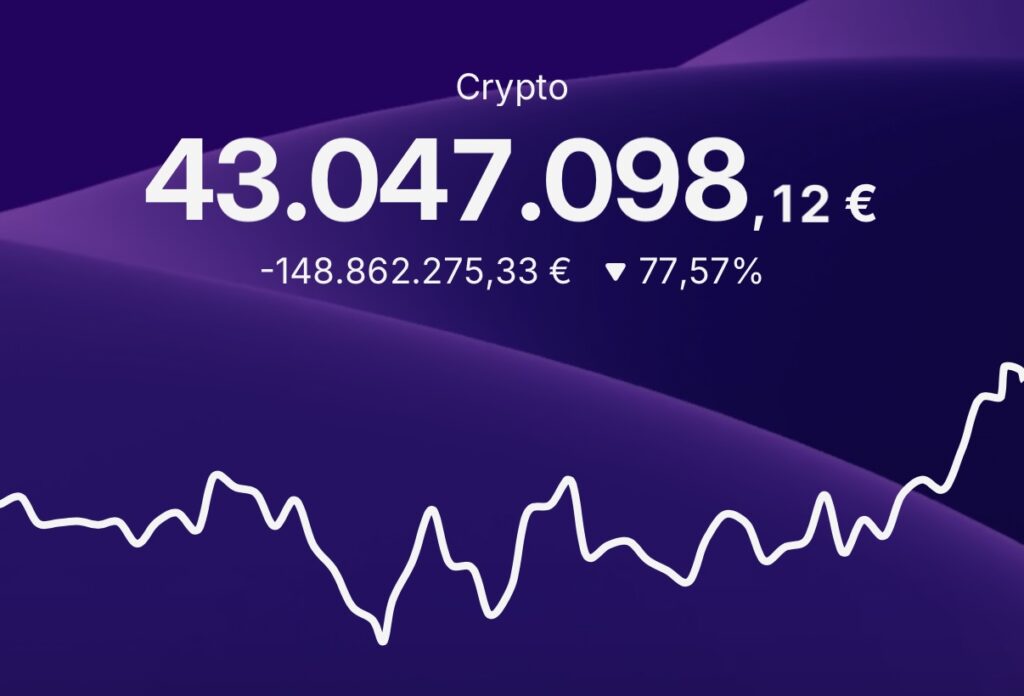
Small things can have big consequences. A few weeks ago, I was suddenly a very rich man, only to lose everything in half an hour. I lost over €43 million, and even though I realize the money was never really there, it still hurts. It got me thinking about crypto and how this could have happened. Could I, or should I, really trust these digital currencies? Who is managing all this value anyway?

Big questions, and the answers were not easy to find. I investigated further and decided to test it myself: I’m going to create my own crypto!

Cleaning Up: Blog

It’s time for another clean-up. I’ve removed the calendar, along with the monthly archive. In the sidebar, you’ll now only find a language selector (English or Dutch), a search function, and a list of categories to quickly navigate to a specific type of content.

The categories themselves have also been cleaned up, and there are now far fewer of them. New are the tags, which make specific topics within a category easier to find. In short, everything now looks a little cleaner and more organized.

Cleaning Up: Thomas and Valentine

ValentineA while ago, my blog was moved to a new location, and since then I’ve been fixing small issues here and there. Broken links, missing images, and similar problems. One of the content-related things I came across involved our little book, Thomas and Valentine. It was written together with Ana when Alex had just been born. Just a small hobby project.

For fun, I even created a small online shop for it. If I remember correctly, we actually sold one copy. Since then, however, the book has been available on my website as a free download. Yet there were still a few old posts where I’m trying to sell the book. That’s why I’m publishing this new post, with direct links to the different versions.

Thomas and Valentine.
English.
Paperback,
ISBN 978-1-4478-1373-6
ePub eBook PDF
Thomas en Valentijn.
Language: NL Dutch.
Paperback,
ISBN 978-1-4478-4261-3
ePub eBook PDF

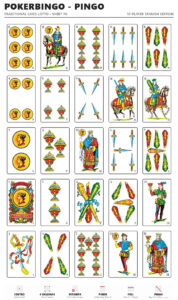
PokerBingo.. Pingo!

Almost twenty years ago, I shared the game rules for a Spanish parlor game on my blog: Pokino. A few years later, however, I received a response from someone claiming to be the trademark owner. Although the game rules themselves are centuries old and belong to the public domain, I decided to play it safe back then and took the post offline.

But great fun never gets old. Because we still play it regularly at home and our prints were overdue for replacement, I sat down at the drawing board myself. The result: a modern, fresh edition featuring completely newly designed cards, clear game sheets, and crystal-clear instructions, entirely free of trademark conflicts and ready to print yourself. I even spend some time to make a version using a normal/international carddeck.

The new name is simply PokerBingo. That way, it’s immediately clear what the game is, a mix with a little bit of poker and a lot of bingo. The word to shout when you win is simply: ‘Pingo!’.

Curious about the new version? Check out and download the printable sheets for PokerBingo here. Now playable with Spanish or international cards.

Bank error in your favor

Crypto heaven!Seeing an unexpected figure like that pop up on a screen can certainly feel surreal and disorienting. My first though was ‘What?’. After some looking around it was quickly clear that there was some kind of error. The graphics showed me that the crypto I bought years ago for 50 euro was actually worth a lot less.

Only natural I think, but I tried to move some of my new wealth to real cash but trying to move a lot of crypto coins to my normal account did not result in the expected deposit of around 60.000 euros, instead I got around 0.05. So much for quitting my job on the spot and living my life.

After about an hour the party was over, and the value was once again around 15 euros. Easy come, easy go. On the other hand, it would be fun to have millions of cash to spend, but where am I going to spend it on..